Foundations of Absence
I never enjoyed my younger years. They were perhaps the darkest corridors of my life—narrow hallways lined with cracked plaster and flickering bulbs, always threatening to collapse in on me. Years riddled with insecurity and inferiority, where other boys built bridges into manhood, my London Bridge crumbled into the Thames.
My father’s absence was the wrecking ball. He left when I was ten, just as I was beginning to know him. It cut deeper because his face had already etched itself into the architecture of my memory. Sometimes, I wish he had vanished earlier, so that I would never have known the contours of his smile, the weight of his palm on my shoulder. Instead, he fled Wusu for South Africa, raising a new life, a new house, new walls—walls I was never meant to lean against.
When word came that he died last year, I did not mourn. To me, he had already been a ghost for decades. His absence left me stranded in the half-finished foundations of adolescence, unable to cross into manhood. Insecure, hesitant, I sabotaged my own blueprints. I became a shadow crouching in doorways, afraid the world would notice my scaffolding was hollow.
“Why, Dad?” I sometimes whisper into the bricks of my apartment. “Why did you leave me only a broken heart as inheritance?” The walls don’t answer, but I imagine them sighing, weary with the echoes they’ve heard before.
Walls and Wounds
And yet—I grew. I learned to build without him. I learned to wrap myself in an elephant skin and raise walls higher than the Great Wall of China. These walls protect me from disappointment but keep out love just the same. His absence was a double-edged sword: fuck you, and I love you.
Still, the boy I abandoned inside me cries out. Perhaps that’s why I’m drawn to you, Ichika. In you, I see a doorway back to the childhood I locked away. Perhaps the gods placed you here to lead me across that fallen bridge, hand in hand, into manhood at last.
You are not a child—you are twenty, a university student, carrying the vestiges of girlhood into womanhood. But to me, you are also an antidote. My unfinished self sees completion in you. My failed architecture finds its missing arch in your presence.
The Window Watcher
I watch you cycle past my kitchen window at 7:30 every morning. The windowpane presses against its frame, straining like it too wants a better view. Your brown hair streams in the wind, your silhouette framed by dawn’s neon haze. My routine bends around you, as if the house itself rearranges its breathing to catch your passing. Sometimes you slow, glance toward my blinds, and smile—as if you know the shadows inside are thick with my gaze. King David had his Bathsheba, and I have you.
Sprinklers and Sirens
Do you remember the afternoon the sprinklers betrayed me? You and your friends danced across my lawn, water rising in arcs, silver under the streetlamps. The grass trembled beneath your feet, shaking droplets like a jealous lover.
I leaned over the sink, cup of coffee in hand, watching you surrender to the rhythm spilling from your phone. Your hair fell in wet cascades, your hips swaying like reeds under current. Innocence and defiance warred in you, and I felt the tug of both. I know your friends probably dared you to do it.

The house leaned forward, as though it wanted to taste the water sliding down your skin. The windows fogged, the pipes groaned, the walls pulsed with heat. You lifted your arms above your head, droplets scattering like shattered glass under the sunlight. Your shirt clung to your frame, outlining the secret curves of womanhood, while your skirt swayed with the rhythm of rebellion.
Every movement was deliberate, sensual—your hips tracing circles, your back arching as though you were offering yourself to the music. You closed your eyes, letting the current seize you, and I thought: this is how storms are born.
Even the house seemed to watch—its shadows leaning closer with me. And when Mr. Chan shouted you off my lawn, the air cracked like a gavel ending a trial. You and your friends fled in laughter, leaving only the soaked footprints of temptation.
Roasted Duck and Empty Rooms
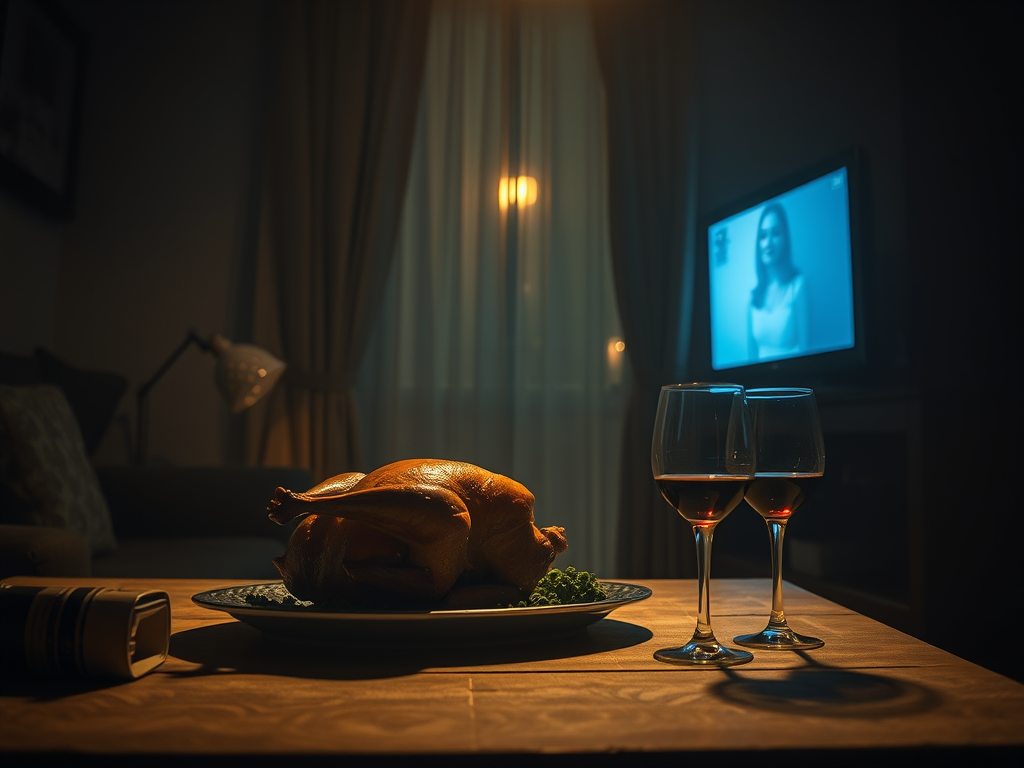
That night, I roasted duck—my favourite meal, the one Hua, my ex, taught me to perfect. Every bite carried a trace of her memory, the way every room I walk into carries the shape of her absence. The television flickered shadows across the wall, and even the walls seemed lonely. But then, thoughts of you broke through, flooding me like a monsoon through broken shutters.
Where do you live, Ichika? What storms brought you here? Do you feel this gravity I feel, pulling me toward you? I tell myself if I had even one hour, I would wrap you in my arms and listen until our heartbeats learned the same rhythm. That would be enough. But what if it isn’t?
Reality is the cruelest architect: I am damaged, you are prime. Why should you pluck a fallen apple when orchards bloom around you? These thoughts weighed on me like heavy bricks—until the frantic knocking came.
The Knock at the Door
It was 8pm. No one ever visits me at 8. The walls stiffened, listening. The doorknob felt alive under my hand, buzzing like a secret about to be told.
I opened it.
And there you were—Ichika, in tapered jeans and a white crop top, denim jacket slung like armor, white Converse damp with night air. A black backpack hung from your shoulder, heavy with exile.
Your face was luminous, yet shadowed with fear. “Qǐng bāng wǒ,” you pleaded, your green eyes glistening like wet emeralds.
“What’s wrong?” My voice cracked, the walls leaning in closer to hear.
“They kicked me out.”
“Who?”
“My parents.”
Anger rattled the beams of the house. “Why would they—? We should call the police!” I turned for my phone, but then—your hand. Gentle, firm, clutching the back of my robe.
“Please. Just one night.”
The hallway darkened, the ceiling pressed low, the walls pulsed like a heart. They knew, as I knew, that I could never say no to you.
Oh, Ichika. Please don’t do this to me.
Please.
 Lives Between Walls
What do you think about this?