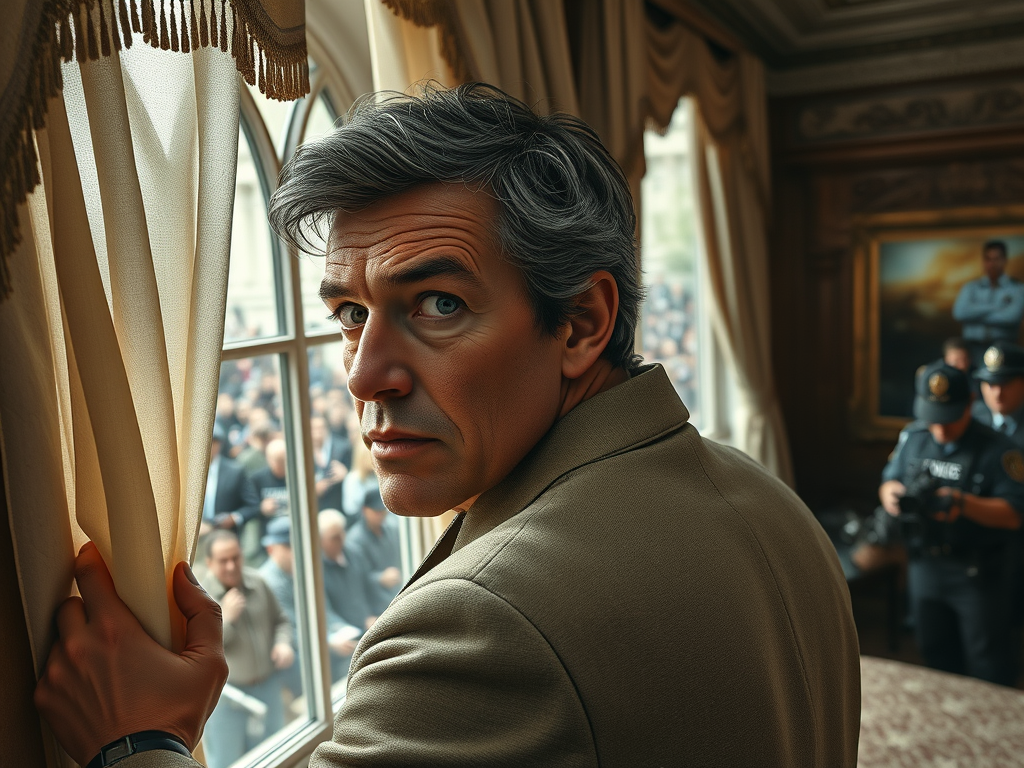
At the Window
Captain Cain drew slowly on his cigarette, the ember flaring against the gloom of the Victorian house. Smoke leaked into the room and merged with the stench of old wood, mildew, and blood — the scents of a structure that had absorbed more secrets than its walls could hold.
From the cracked window frame, its paint blistering and peeling like diseased skin, he watched the throng gather in the yard. Neighbours, or so they called themselves. Concerned faces, muttering voices, hands clutching coats tight against the autumn wind. But Cain wondered if their concern was really for the dead, or for themselves — the need to believe that their own doors and windows would keep the horror at bay.
His eyes fixed on a young Chinese man holding a toddler, shouting at the officers who restrained him. “You were supposed to be protecting our families! The blood of the innocent is on your hands!”
Cain smirked as the smoke left his lungs. There was no one who was innocent. There was no victim, we were all villains of varying degrees. In the land of the evil, the one who is considered a saint is just the one who is less evil.
He remembered Tamara, his sometime fuck buddy, her voice sharp with both care and cynicism as she teased him: “Smoking will kill you one day, Cain.” Death was relative. One could die and still live to tell the tale. And nicotine, unlike most vices, had a way of quieting his temper — a temper his men had long since learned to fear.
The Reporters and the Past
Reporters pulled up in dented vans, spilling out into the yard with their cameras and questions. They buzzed like flies on meat, eager for their scoop. Cain knew the script well — this was the fourth major murder case in the area this year.
The last one haunted him still: the girl Angie, who had fallen from a suburban balcony. Ruled a suicide, though O’Sullivan, first on the scene, had suspected otherwise. O’Sullivan — the only detective Cain trusted to still smell rot beneath a polished floor. Cain himself had stared at the balcony railing, at the way it had splintered, and thought: architecture doesn’t lie. People do.
Now here was another body, another room. And the weight of them was grinding the city down. Once, police had been heroes in New York. Now they were scorned. Recruitment was at an all-time low. The precinct’s morale was gutted, partly from propaganda — like the newspaper cartoon that had shown a fat police chief gorging on donuts while a thief skipped past. Chief Jim had sued, but the damage stuck. Cain knew his force was hollowed out, men and women hanging on by duty alone.
The Passage to the Bedroom
“Captain.”
A rookie’s voice echoed down the hallway, pulling him from the window. Cain flicked his cigarette stump into the yard and followed.
The passage was long and narrow, its faded wallpaper peeling into curls, its floorboards groaning as though tired of bearing witness. Architecture didn’t just host death — it carried it. Cain could feel the house herding him toward the bedroom, guiding him to the heart of its infection.
Inside, the room smelled of cordite, sweat, and blood. The ceiling sagged slightly, as though bending under the weight of what had happened.
Roger Waik lay on the floor, gagged and lifeless, a dark pool spreading beneath him. Jack Remiro was slumped on the bed, blood soaking into sheets that had once been white. Domestic intimacy, transformed into theatre of violence.
The Rookie’s Revelation
The rookie handed Cain a pair of forensics reports.
“What do I look like, a fucking scientist?” Cain muttered, irritation scraping his voice, “What is this shit?” His men knew his moods by now — the temper, the foul mouth. But the boy didn’t flinch.
“This shit proves things aren’t what they seem.”
Cain stroked his black goatee, a tell his men knew well. “Go on.”
“Jack didn’t kidnap Roger. There’s no evidence of contact. No fist marks, no bruises, no cuts. Nothing.”
Cain’s gaze shifted to the corpses. The room seemed to close in, shadows stretching across the wallpaper like prison bars. “So this is all a setup?”
The rookie nodded, bristling with conviction.
Cain looked at him for a long moment. Three months in uniform, still bright-eyed, still full of zeal. Cain felt the jealousy rise like bile. Once, maybe, he had been like that. But time and the city had eaten it out of him.
The Woman Against the Wall
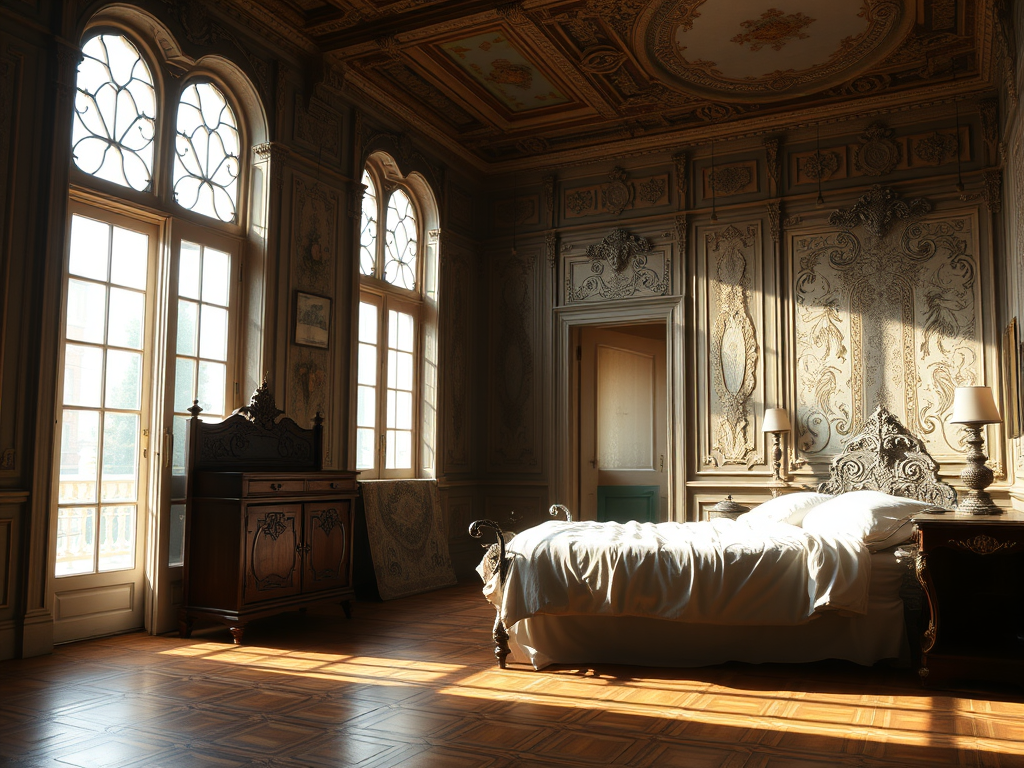
“And her?” Cain gestured toward the woman collapsed against the wall. Her blood traced the flowers on the faded wallpaper, painting them into a grotesque bouquet.
“Well,” the boy stammered, “Jack must’ve been having an affair. His semen and saliva were on her.”
Cain smirked. “Do you have a girlfriend, Jeremy?”
The boy stared at his shoes. “Yeah, but it’s… complicated. I mean, I have a crush on her but I don’t know if she feels the same—”
Cain’s raised hand cut him off. “Good. When you get home, let her fuck your brains out so you can forget everything you saw here today.”
The rookie flushed crimson, and Cain almost enjoyed the cruelty. But the truth was, he was already spinning the story. The advantage of being Captain: first at the scene, first to manipulate. The gun had Jack’s prints now. The crime could be framed as passion, lust, rage. A simple story for the city to swallow.
The Orb
But beneath the bed, Cain had seen something else.
A glow, faint but undeniable. A marble-sized orb pulsing like a heartbeat. When he touched it, the house itself seemed to convulse. The floor quaked, the walls hummed, and light seared through his skull. Time bent. For two minutes, maybe fifteen, he wasn’t in the bedroom at all but inside the house’s memory.
When it ended, his left ear — deaf since childhood — rang with perfect sound. He snapped his fingers, marveling at the impossible. Then he slipped the orb into his pocket as the sound of backup boots thundered in the hall.
It wasn’t that the police had been incompetent for not solving the recent batch of murder cases in the area after all. The truth had been stranger, darker, and older than incompetence.
The house had given him a gift. Or a curse. Either way, it had marked him.
The Departure
Cain lit another cigarette as he turned to leave. Smoke curled against the cracked plaster, tracing old scratches in the doorframe and gouges in the floorboards where furniture had once been dragged. This house had archived violence in every inch of itself.
The city called it crime. Cain knew better.
The houses were keeping score.
Insomnia became his closest companion that night, and the architecture of New York whispered to him through the dark.
 Lives Between Walls
What do you think about this?