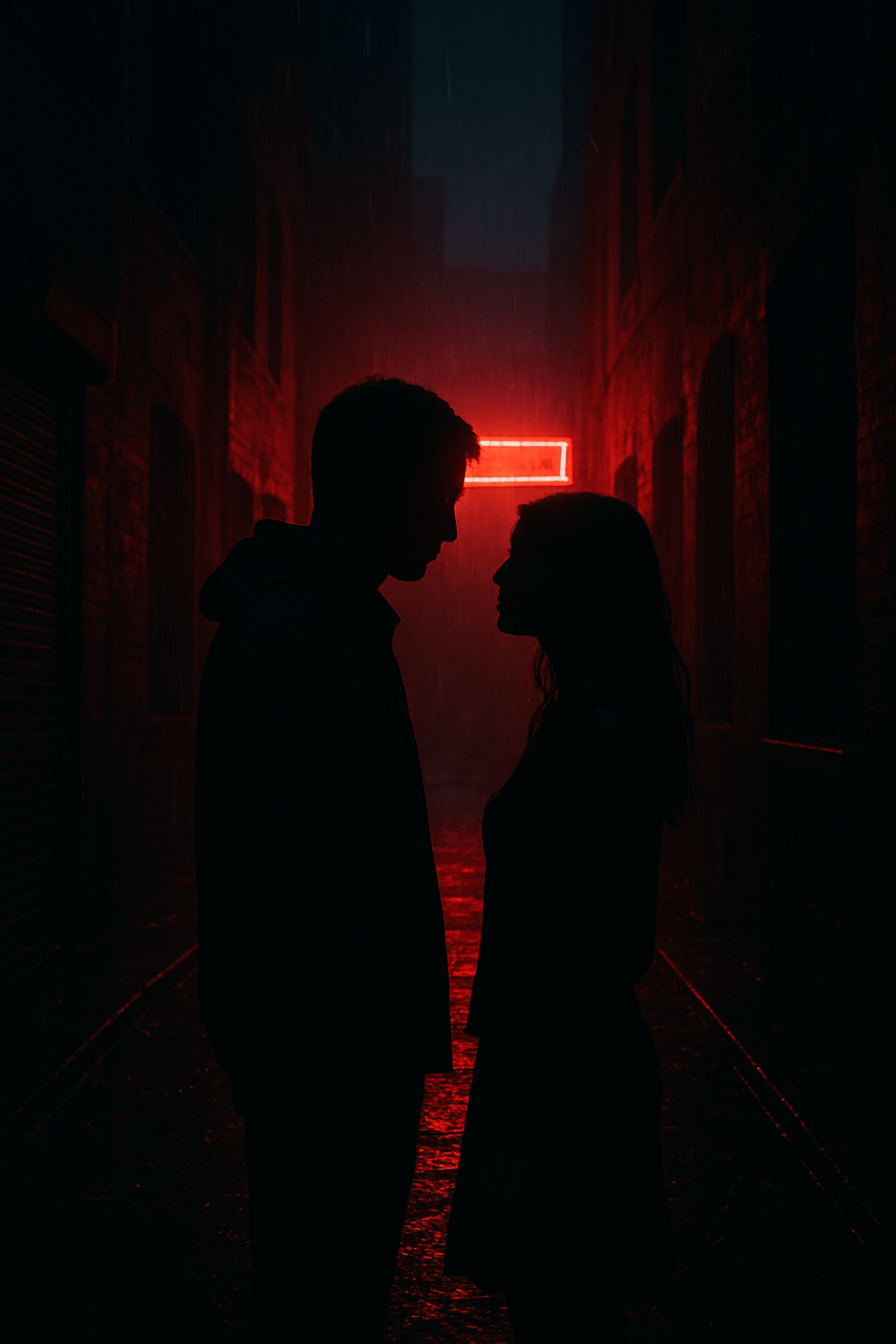
It was Friday. One could tell by the cacophony of honking horns, jostling crowds, and the blare of music. A single whiff—food, gasoline, urine—sent Quinn into a sputtering cough, his hand pressed over his nose. He was no city boy, and his smoking habit only worsened it. Jennie had always said Johannesburg would devour him. She had been right.
On her father’s farm, life had been slow, predictable. The horizon wide, the sky a dome of mercy. But the city dangled its bait, and like a hungry fool he lunged. Now he had degrees, a practice, his name on plaques… and the weight of secrets pressing down like a collapsed ceiling.
The city was a living organism, a Leviathan fattened on men’s dreams, then spitting their bones into the gutter. Revelation had it right: Babylon always falls—and drags its sinners with it.
“Ureng, bosso?” A man shoved a fake Rolex in his face, flashing gold teeth.
Quinn forced a smile. “Ke shap, bra,” he muttered in clumsy Sesotho. The man laughed at his accent but drifted on.
Still, Quinn felt the eyes. Pale skin marked him out, a moving target, a reminder of the wound the country had yet to heal. Apartheid was gone in law, not in spirit. He shoved his phone deeper into his pocket and pushed through the crowd faster. Daygon was waiting. If he didn’t meet him today, everything would collapse.
The Descent
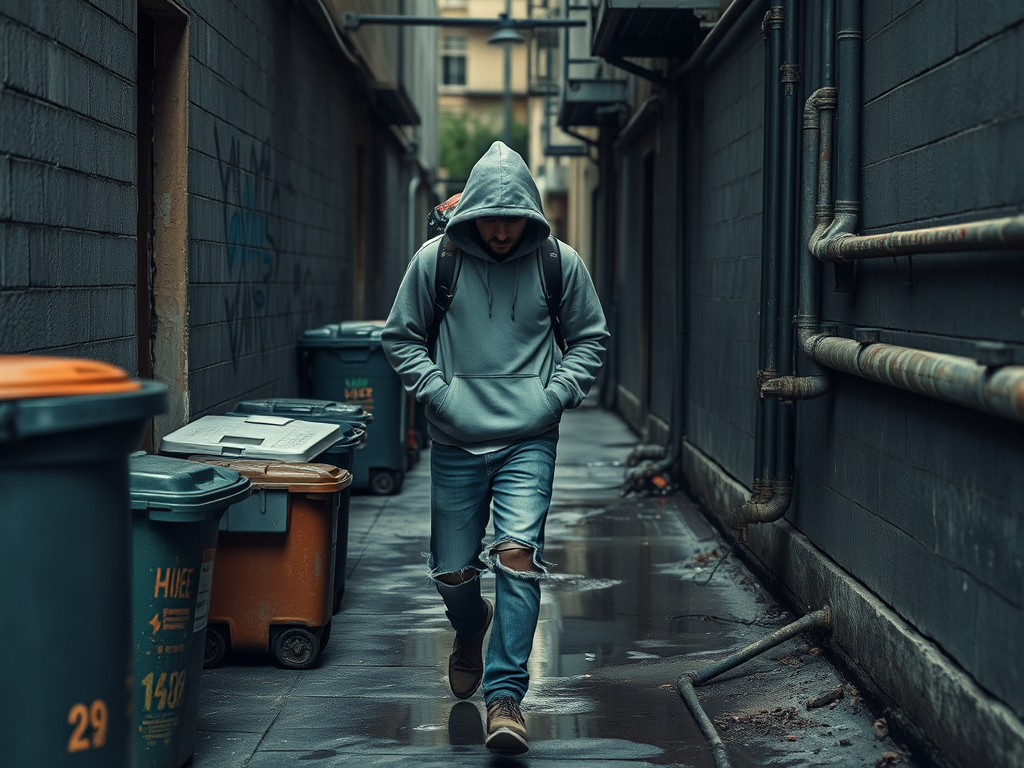
Alleys pulled him away from the main street until the city’s roar became a dull echo. The deeper he went, the colder it grew. Shadows stretched across cracked plaster and broken pavement. Quinn slipped on his black hoodie, moving like someone who did not want to be seen. His empire—his medical career, his wife, his children—would collapse if anyone found him here, like the troubles of Job. But Job had been blameless. He was not.
Water dripped from corroded gutters. Slimy puddles oozed across uneven cobblestones, stained with piss. The alley was a corridor of ruin—walls sweating, pipes leaking, the city’s bowels exposed. In such places, decency was a luxury. Yet these forgotten arteries fed the powerful, sustaining their empires with shadow bargains.
A stench blindsided him—raw waste. Tears stung his eyes. Last night it had been onions and laughter with his daughters in the kitchen. Today it was filth. Heaven and hell in a single cup.
He paused at a cracked window, catching his reflection in fractured glass. No Versace shirt, no tailored suit—just jeans, hoodie, a crown of unkempt hair. Less a crown, more a jester’s hat. Perhaps this was what wealth looked like when walls stripped you bare: shame bleeding through the seams of silk.
At the alley’s end loomed a rusted iron door, its surface blistered red with time. Quinn prayed it was rust, not blood. He knocked—once hard, twice soft.
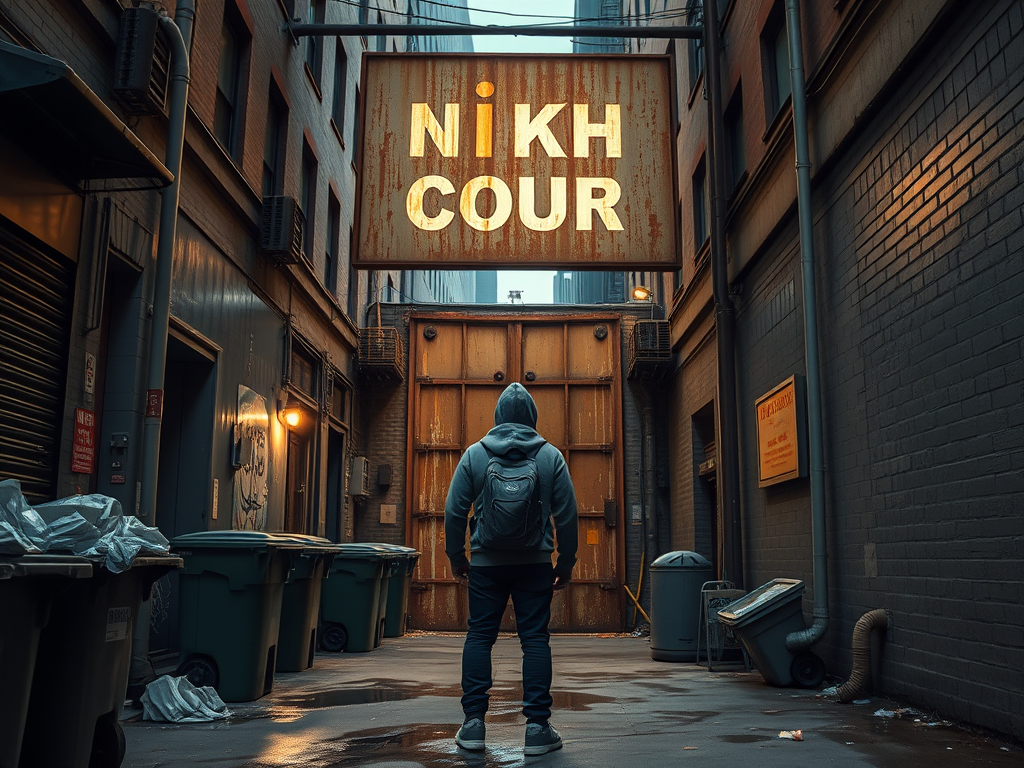
Above, a broken neon sign buzzed, threatening to fall like a guillotine. For a heartbeat, he almost wished it would. Better crushed here than destroyed by the life he had built. But cowardice—or faith—held him back. He was not ready to die, not yet, not with blood already on his hands. The fine print of every devil’s deal was the same: in the end, the sacrifice was always you.
After a long silence, the door creaked open. A woman stood there, scantily clad, her smile more rehearsed than real.
“I’m Quinn. Here for Daygon.”
She beckoned him in.
The Waiting Room
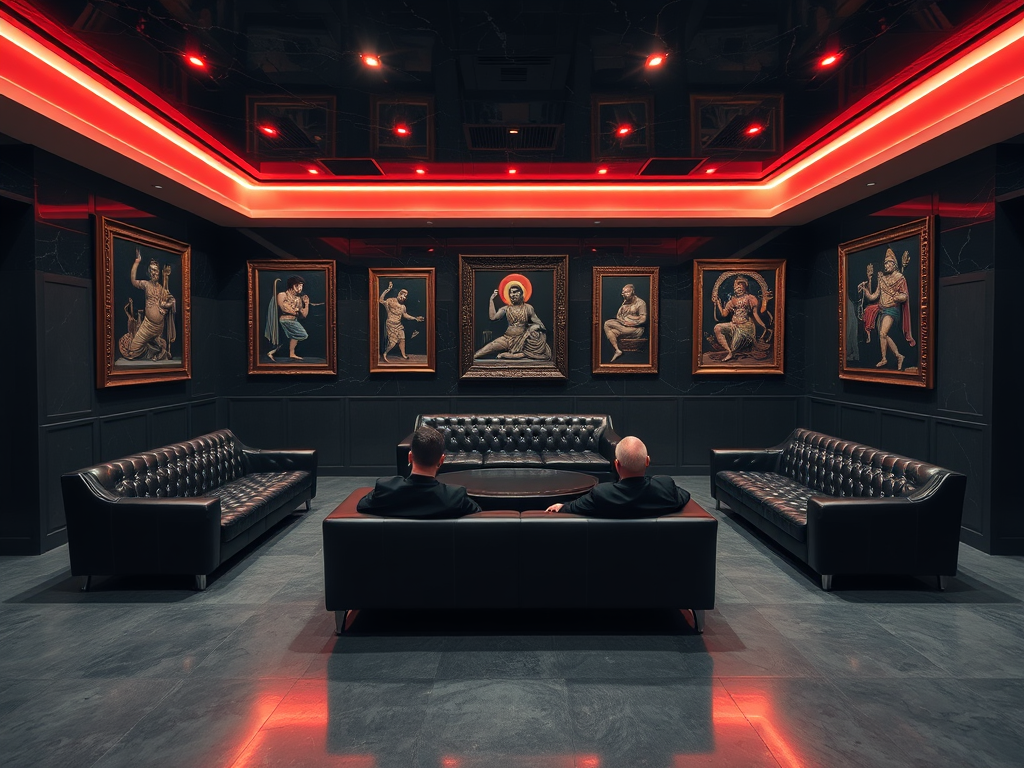
Inside, wealth cloaked decay. Black leather couches, porcelain tiles, marble-like ceilings—all drowned in an eerie red glow. The geometry was deliberate: a box without windows, a trap disguised as a lounge. Erotic paintings filled the walls like frescoes of corruption—gods writhing with mortals, orgies frozen mid-ecstasy, decadence parading as art.
Two men sat in silence. One, in a tailored suit, looked up. His eyes were wide pools of quiet panic, pleading for rescue he knew would never come.
“Move,” the woman ordered, heels clicking like a metronome of control. The lace and leather that barely covered her body shimmered with each step. Shame had no place here.
Quinn followed. Her beauty jarred against the setting, her brokenness sharper still. He whispered a prayer for Jennie, for his girls, though he knew it would go no higher than the marble ceiling – heaven didn’t reach that far.
Midnight
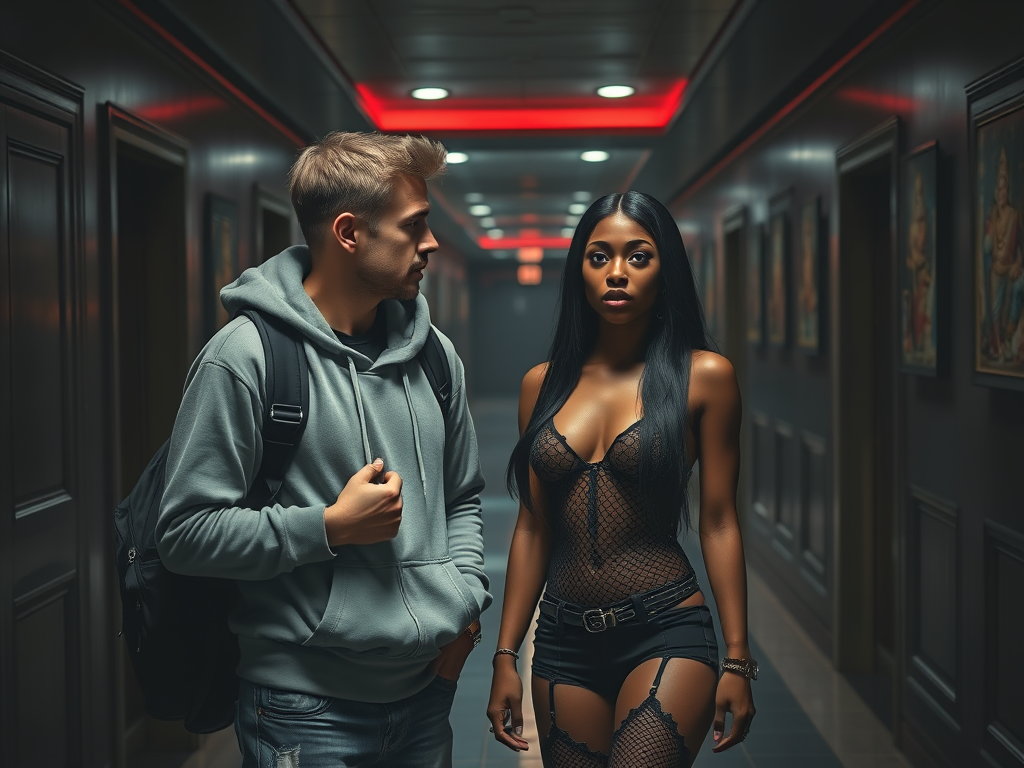
The corridor beyond was a tunnel of suffocation. No windows. Just narrow walls lined with doors that breathed moans and shouts. Human desire reverberated, echoing down the passage like sound trapped in a cathedral of sin. Smoke and sweat clung to the air like curtains sealing off the last traces of conscience.
Quinn gagged. “Oh my God.”
“There is no God here,” she said dryly. “You can hear that yourself.”
Her face in the half-light struck him—beautiful, but battered. Make-up could only mask so much.
“How did you end up here?”
She smirked, though it wavered. “Same way you did. We all have stories.”
“What’s your name?”
“Midnight.”
“Are they blackmailing you too?”
She said nothing. Silence was answer enough.
Quinn’s chest ached. “I have a wife. Two daughters. I should be home. But there’s a girl. A video. They framed me. If my family finds out…” His throat closed.
Her eyes stayed cool, practiced. But when his voice broke, her mask flickered. Her hand, hesitant, rested on his shoulder.
“I’m not a bad man, Midnight,” he whispered, guilt bending his spine.
“It’s okay,” she murmured. For a moment she remembered who she had been, before chains, before handlers. Then the memory passed. “Come on. He’s waiting.”
But Quinn’s whisper followed her heels. “I’m planning to kill him today.”
She whirled. “You’ve lost your mind!”
“Maybe. But I can’t live afraid. Not after the photos. My girls, walking home from school…” His voice hardened. “It ends tonight.”
Her lips parted, fear and recognition mingling. “You don’t understand. Daygon owns this city—politicians, cops, lawyers. He has men who’d end you before you blink.”
Quinn shrugged. “Doesn’t hurt to try.”
Something flickered in her eyes. Fear, yes, but also rebellion. Like a prisoner hearing whispers of escape.
“Better to die once than to die every day,” he said.
“You’ve killed before.” She said at last.
“Yes.” The word fell like stone.
“I didn’t want to. He trusted me—on my table. But Daygon gave the order. Potassium chloride. A clean death. I did it.”
Her hands trembled. Memories rose—Congo, chains, years in captivity. “That’s how monsters are made,” she whispered. “One death at a time.”
He looked at her, not at painted lips or leather, but the girl inside—trapped, gasping for light. “What else should I do then? Tell me!”
She had no answer. The corridor closed tighter around them as they mounted the steel spiral staircase. Each step reverberated like a sentence being passed. Architecture itself seemed to press down—the spiral wrapping them in inevitability.
Midnight was silent as midnight itself. Perhaps she had lived so long in darkness that a shard of light now seemed hostile. And though she could have betrayed him—exposed the vial of poison hidden in his pocket—she didn’t. Betrayal requires loyalty first.
At Daygon’s office, she knocked softly, then turned. Her eyes, solemn, searched his. The door loomed behind her like a gate to judgment. Between them hung hope, despair, and something dangerously close to longing.

In that suspended instant, the space itself pulled them together—the tight corridor, the looming door, the heavy air. Their lips found each other in defiance of death, a kiss forged in confinement, desperation made flesh. Their tongues searching for desperate solace within each other, as the door yawned open.
Please be my Rahab, Quinn’s soul begged. My modern-day Rahab.
 Lives Between Walls
What do you think about this?