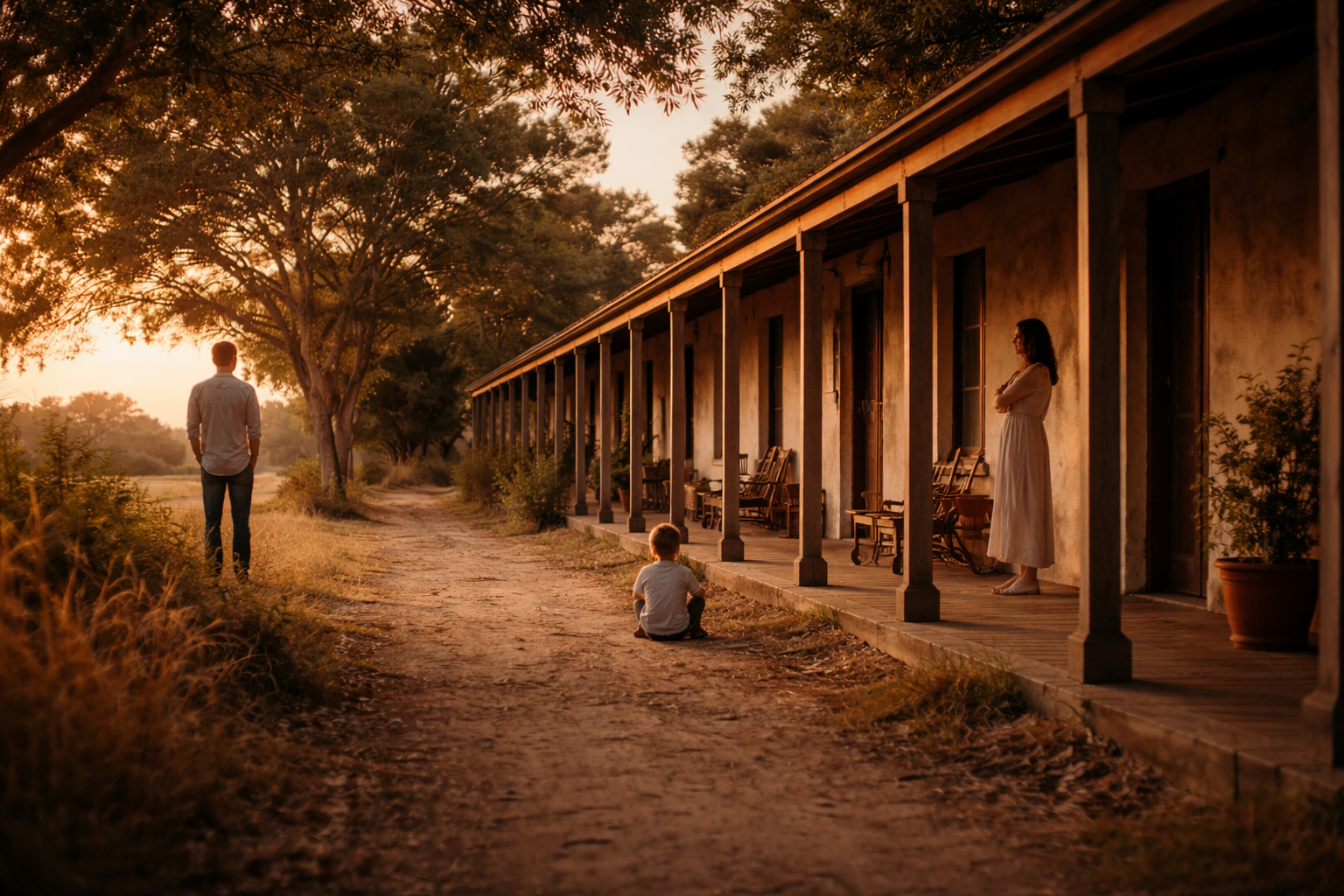
The house is long.
Not big — just stretched, as if its rooms were pulled apart and never returned to where they belonged. Sound travels strangely here. Words spoken in one place arrive somewhere else thinner, altered, like they’ve passed through too much space to stay intact.
I learned how to move inside it. I became adept at it. Built my life around it till it became my normal.
Some rooms welcomed laughter. Music lived there easily. Other spaces held silence, heavy and unmoving. I learned to soften doors, to choose my words carefully, to step lightly across thresholds. I learned which version of myself felt safest to bring into a room.
When she left, the house felt hollow. When she came back, I became careful in ways I didn’t know how to name. I offered warmth where I could — quiet hands, gentle touch, questions asked softly. Are you okay? Are you sore? I lived alert, listening for signs that something was breaking.
Still, even with my sensitivity, rooms closed without warning.
She could disappear down the length of the house and return later as if nothing had happened, while I stayed behind with our child, watching time stretch. When I asked where she had gone, she said she needed space. When I asked from what? – my old mistakes were brought forward, laid out like proof that I should already understand.
The apology, when it came, was brief. Only for the distance to ensue like a relentless tide.
Our child noticed things I wish he hadn’t.
The uneven warmth. The way affection lived in pockets. He ran between us, offering smiles, small performances, checking where they landed. Sometimes he paused between rooms, looking from one parent to the other, unsure which way to go — as if the house itself was asking him to choose.
At night, music played from one end of the house—love songs, worship songs, her voice lifted in praise. The sound filled the air without ever touching me, and I found myself wondering which Lord this was, one who could be praised while I remained unseen.
I’ve always been the bigger man.
The one who steadies things in this house. The one who rescues, repairs, absorbs. Letting go of that role filled me with guilt — the fear that if I stopped holding everything together, something terrible would happen. That it would be my fault. That I would have failed to save her.
The house seemed to wait.
Eventually, I stopped rearranging myself to fit it.
I stopped checking every sound, every silence. I stopped over-apologising, over-adjusting, over-holding. I stayed where I was, occupying my own space fully—not withdrawing, but no longer disappearing either. I allowed the house to be what it was, and I allowed others to step in and see its length for themselves.
Because a house that only works when one man carries it, is already broken.
Because a house that teaches a child to search its rooms for affection is already unstable.
So I stand still.
Not leaving.
Not rescuing.
Standing long enough to see whether this house can carry itself, or whether it ever intended to meet me at all.
 Lives Between Walls
What do you think about this?