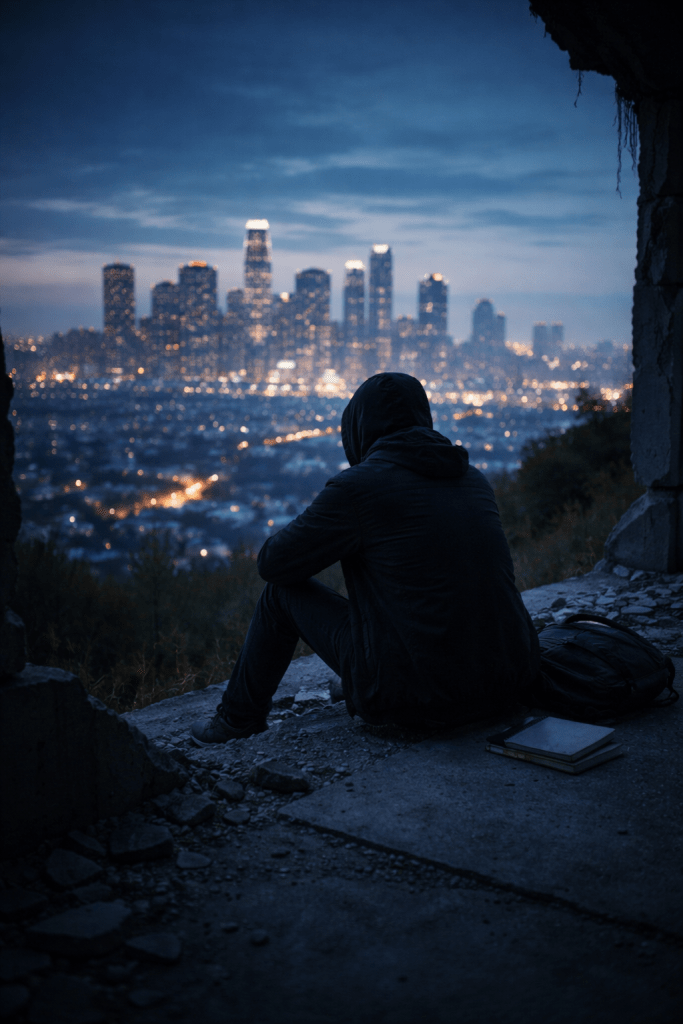
The more I walk with God, the more I realize that Christianity has a center and a borderland.
The center is where things are named, recognized, institutionalized, and made legible. It is where etiquette lives. It is where acceptable language lives. It is where form is often preserved and rewarded. It is where people learn what holiness is supposed to look like, sound like, dress like, and behave like. The center has its place. It preserves continuity. It keeps things together. It gives people a recognizable structure.
But the center is not the whole territory.
There is also a borderland.
The borderlands of Christianity are the edges, the peripheries, the places where things are not as polished, not as controlled, and not as easily categorized. They are the places where truth still has wildness in it. They are the places where substance is often found long before form catches up. They are the places where God deals with people who do not fit neatly into the institutional packaging of faith, but who are nevertheless deeply His.
At the center, religion can slowly begin to associate holiness more with etiquette than with truth. Holiness starts to look like conformity to a style rather than conformity to God. What people call discipleship can sometimes become conformity to a form. A tone. A presentation. A behaviour. But calling is often messier than style. Calling does not always come dressed in church language. It does not always wear Christian etiquette. Sometimes it comes with wilderness on it. Sometimes it comes with art on it. Sometimes it comes with justice on it. Sometimes it comes with a voice that sounds too raw for the center.
That is where the borderlands matter.
Prophets often live on the edges. They are rarely the settled stars of the institutional system. They dwell in caves, in wildernesses, in obscurity, in hiddenness. They appear from the margins with a word sharp enough to confront the center, and then often disappear again. Nathan emerges when David must be confronted. The man of God appears to speak against the altar and King Jeroboam. John the Baptist emerged from the wilderness to point to the Messiah. The prophet lives with enough distance from the center to remain free in truth. That distance matters, because truth in the borderlands is not polished into harmlessness. It remains raw, exposed, and dangerous enough to call the center back to substance.
That, to me, is one of the greatest functions of the borderlands of Christianity: to call the center back to substance.
The center tends to preserve form. The borderlands preserve fire. The center tends to protect what is acceptable. The borderlands tend to reveal what is real. The center tends to reward what it can categorize. The borderlands carry those callings that do not fit the categories, but are no less ordained by God. In fact, some of them may be more necessary than ever.
There are callings that are for the borderlands. Callings that do not fit the centrality of Christianity in its institutional form. Callings that live between church and the world, between prophecy and craft, between justice and creativity, between spiritual depth and cultural fluency. These callings often confuse religious people because they do not arrive in familiar packaging. Like David before Goliath, they cannot wear Saul’s armor. They have not proven it. They come with the weapons forged in their own wilderness: the sling, the stone, the hidden history with God.
This is why the borderlands can look suspicious to the center. The center does not always know how to bless what it cannot categorize. It knows how to platform what already fits its grammar. The centre has its own language, and so do the borderlands. Prophets are the ones who are able to navigate between both realms, becoming the bridges between the two.
The borderlands are where the raw and the real are allowed to breathe. They are where people are reached who would never be reached by polished, domesticated religion.
And perhaps that is why so much of what is most alive can seem strange at first. Because it comes without the packaging that the center has learned to trust.
The borderlands are not anti-Christian. They are not outside God. They are where some of the boldest voices are formed.
The danger, of course, is that the center can become so attached to form that it forgets substance. It can become so attached to what looks sacred that it misses what is actually alive. That is when God, in His mercy, sends a voice from the edge. A borderland prophet. A disruptive word. A call back to truth.
Because every now and then, the center must be reminded that it is not the source. It is not the whole map. It is not the final measure of what God is doing.
Sometimes the center needs the borderlands more than it realizes.
And maybe that is where some of us are called to live: not fully at the center, not swallowed by the world either, but in that difficult, holy terrain between them. In the borderlands. Where truth is still free enough to speak. Where substance still outruns performance. Where God forms people who cannot be contained by borrowed armor.
The borderlands of Christianity are not places of abandonment. They are places of testing, truth, and prophetic freedom.
And sometimes, they are the very place from which God calls the center back to life.
 Lives Between Walls
What do you think about this?