Lessons learnt from my trip to Kenya: UJ – GSA
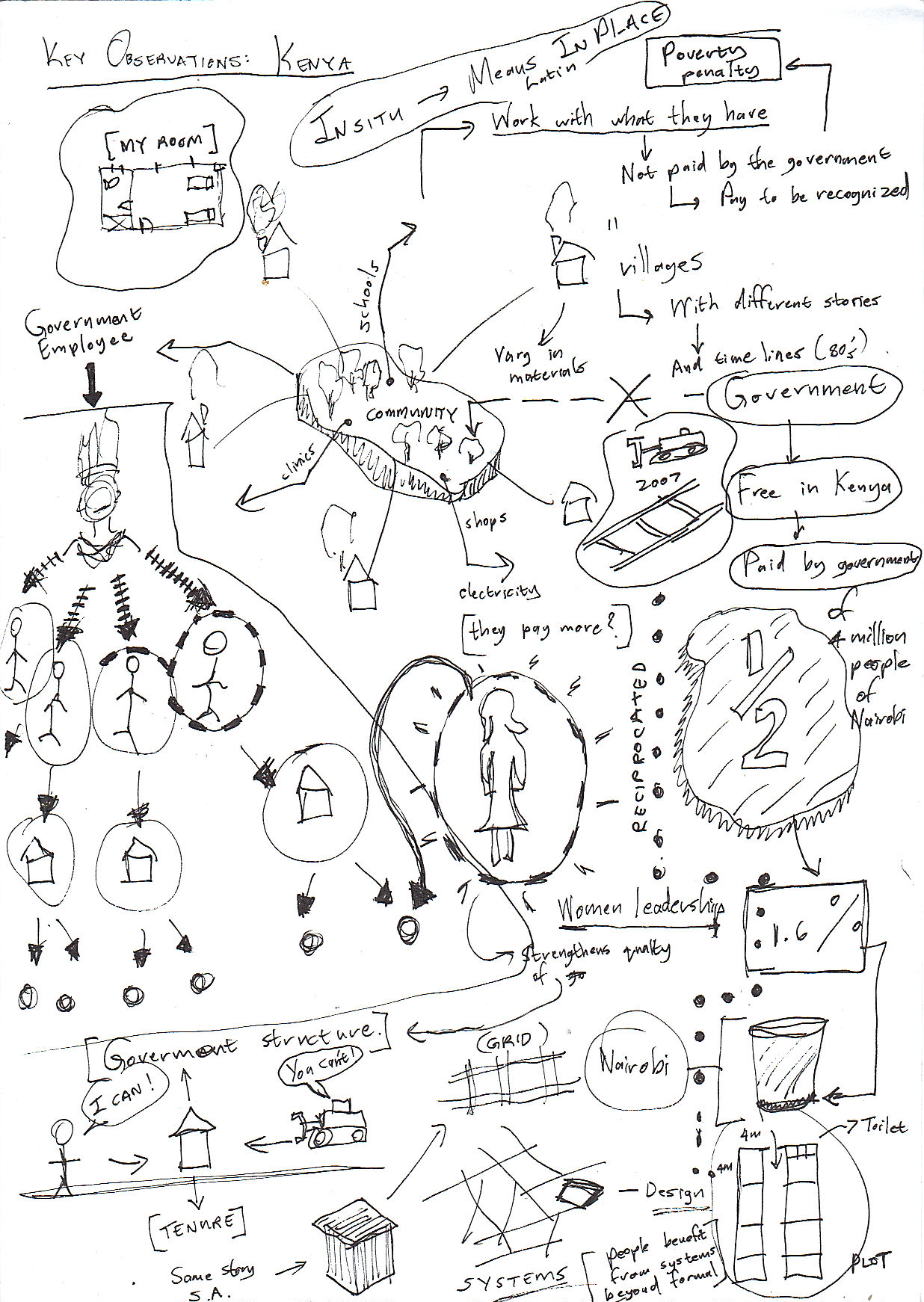
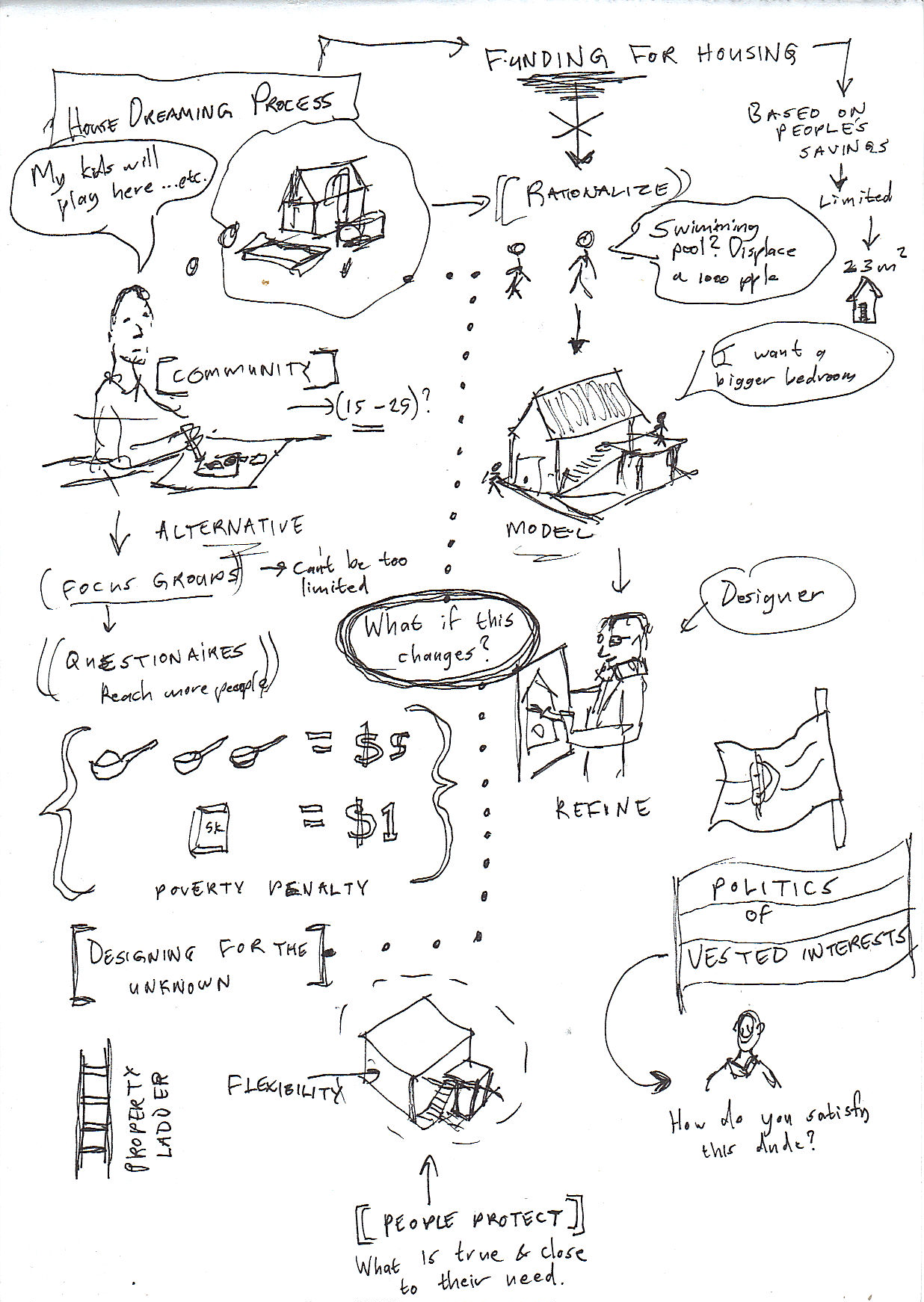
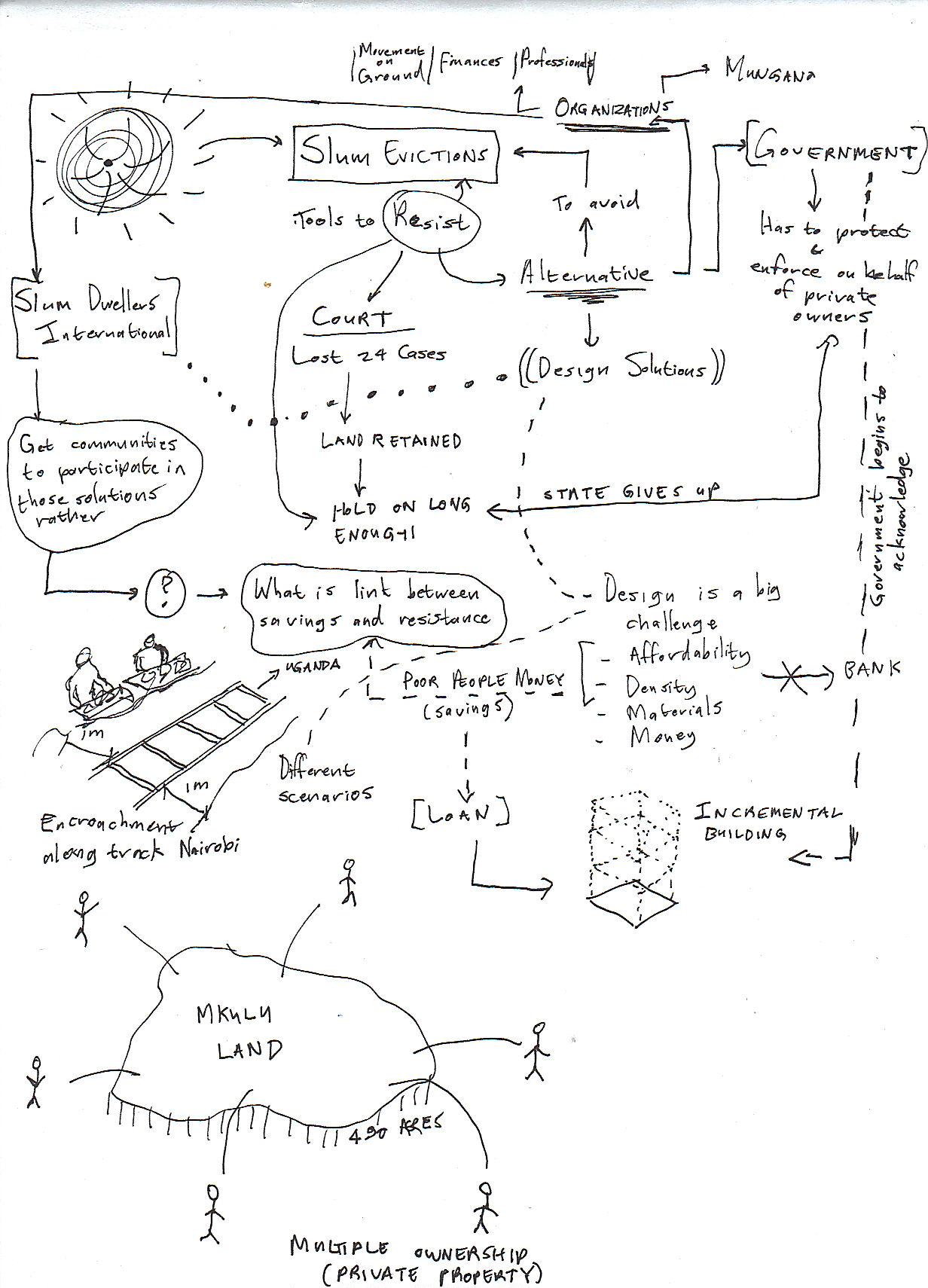
SKETCH EXPLORATION
DAY OF DEPARTURE

When the day had finally arrived for Unit 2’s much anticipated departure for Kenya, I cannot really say that I shared the same excitement that the other students had (infact I felt that even my friends and family were more excited for me than I was). I ascribe this to the fact that prior to this trip, I had not really ventured beyond the borders of what has been my home Country for the last 28 years of my existence. This piece of land, along with its ways, customs, culture and values is all I had ever been exposed to and experienced – it was hard for me to even comprehend anything different. Sure technology has brought the world closer to us than ever before with things like television and internet, however these can never substitute physical presence. A lesson I learned once again through the course of our trip. So this lack of excitement, fueled by a sense of not knowing what to expect, turned out to be the best way to experience the unfamiliar – as it is without any preconceived expectations which are based on a prior knowledge or assumption. So through this approach I feel I was able to learn and take in more, as I was the equivalent of a blank page – so to speak.
ARRIVAL

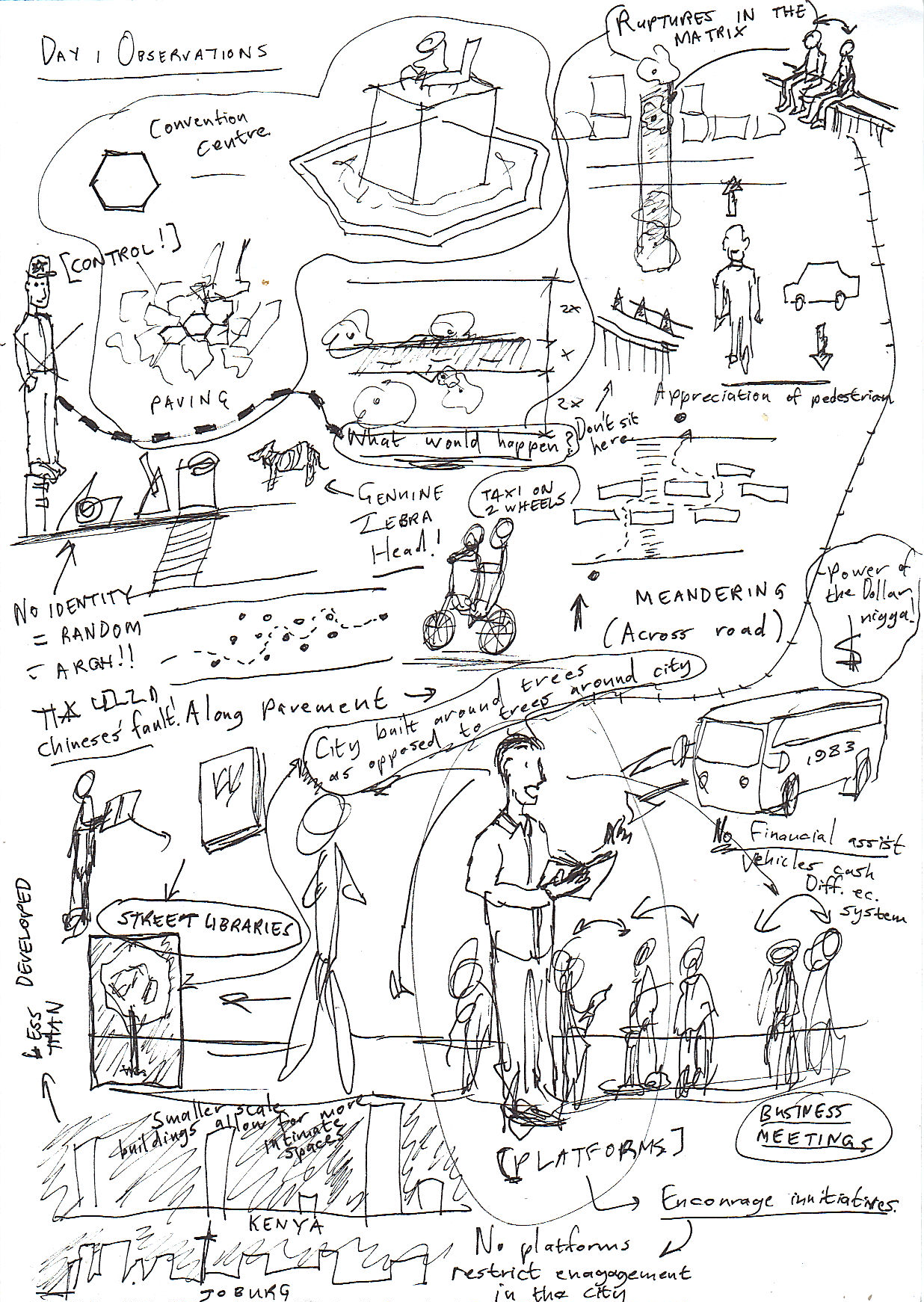
When we arrived at Nairobi, I was a bit surprised at just how undifferent it felt from what I was used to. It seemed like just another city in South Africa, to the extent that there were times I would even make a reference to a place in Johannesburg – only to be embarrassingly reminded by a colleague that we were not in South Africa anymore. Perhaps the major elements that distinguished Kenya from Johannesburg were the cars (which were not as flashy as their South African counterparts), the uncohesive design of architecture (which frustrated me as I could not pinpoint the identity of the city), the abundance of vegetation in the city, coupled with plenteous public space and of course, Swahili speaking People. The climate even reminded me of the coastal regions back home in Durban so I felt right at home.
OBSERVATIONS
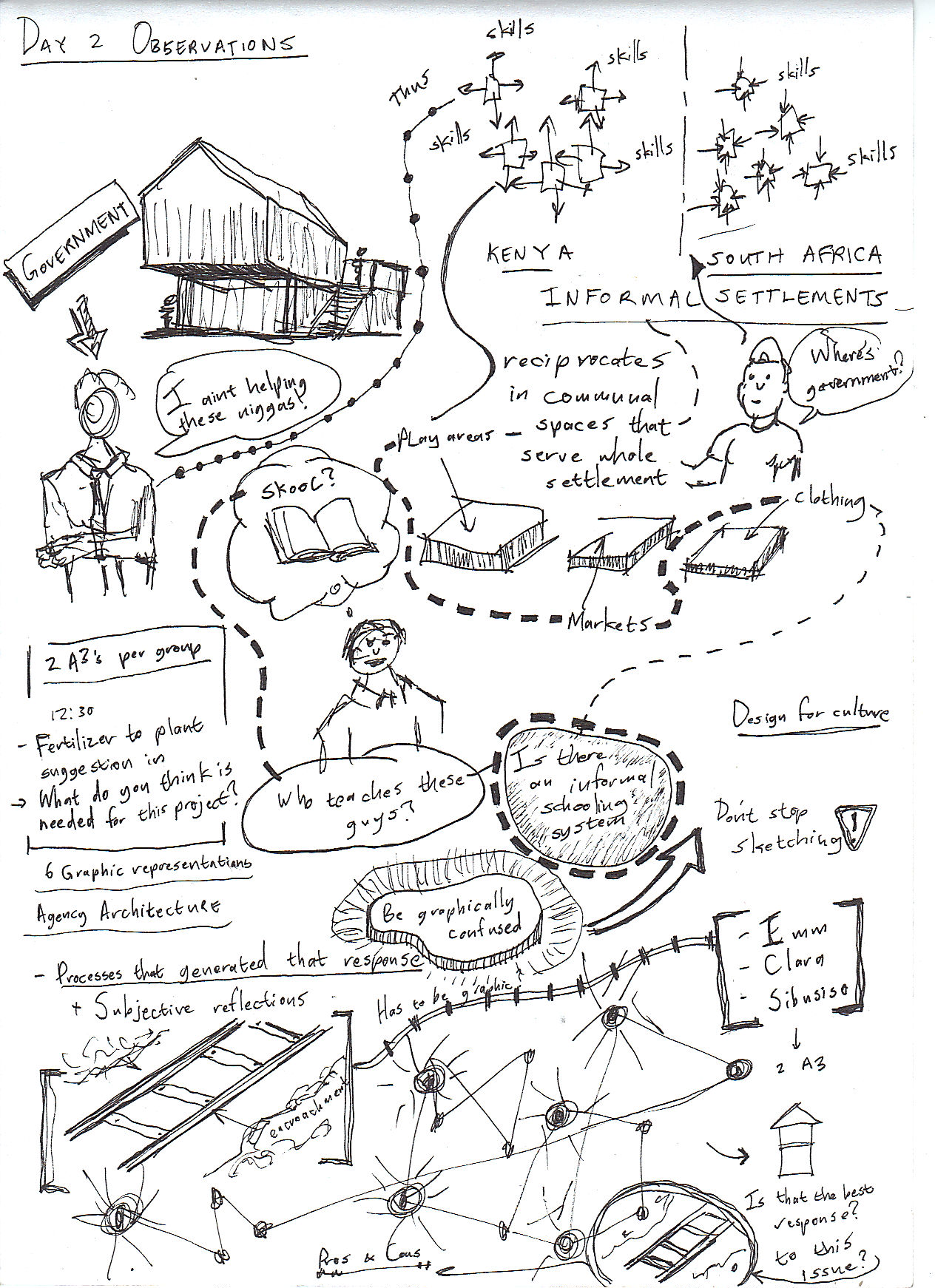
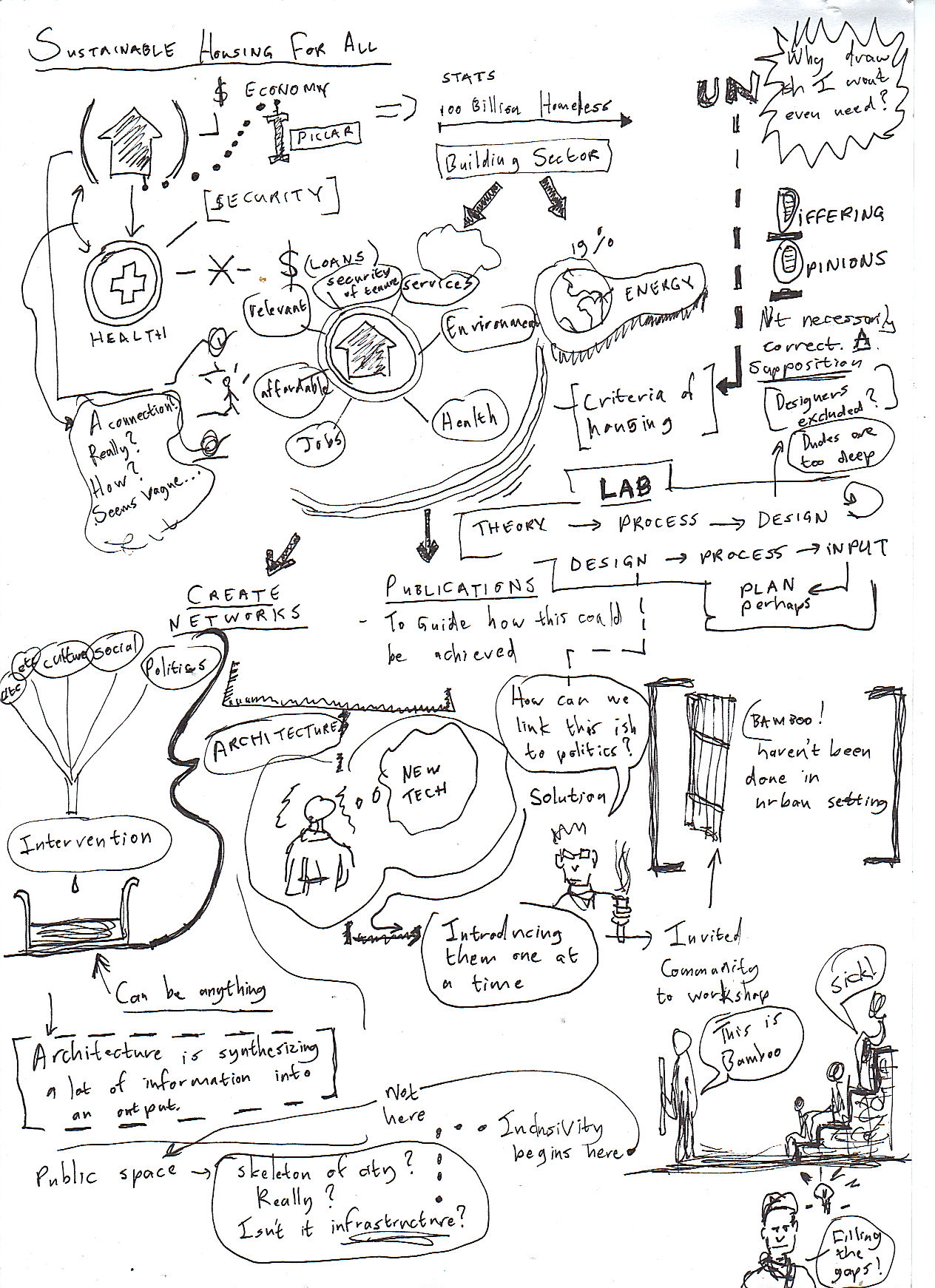
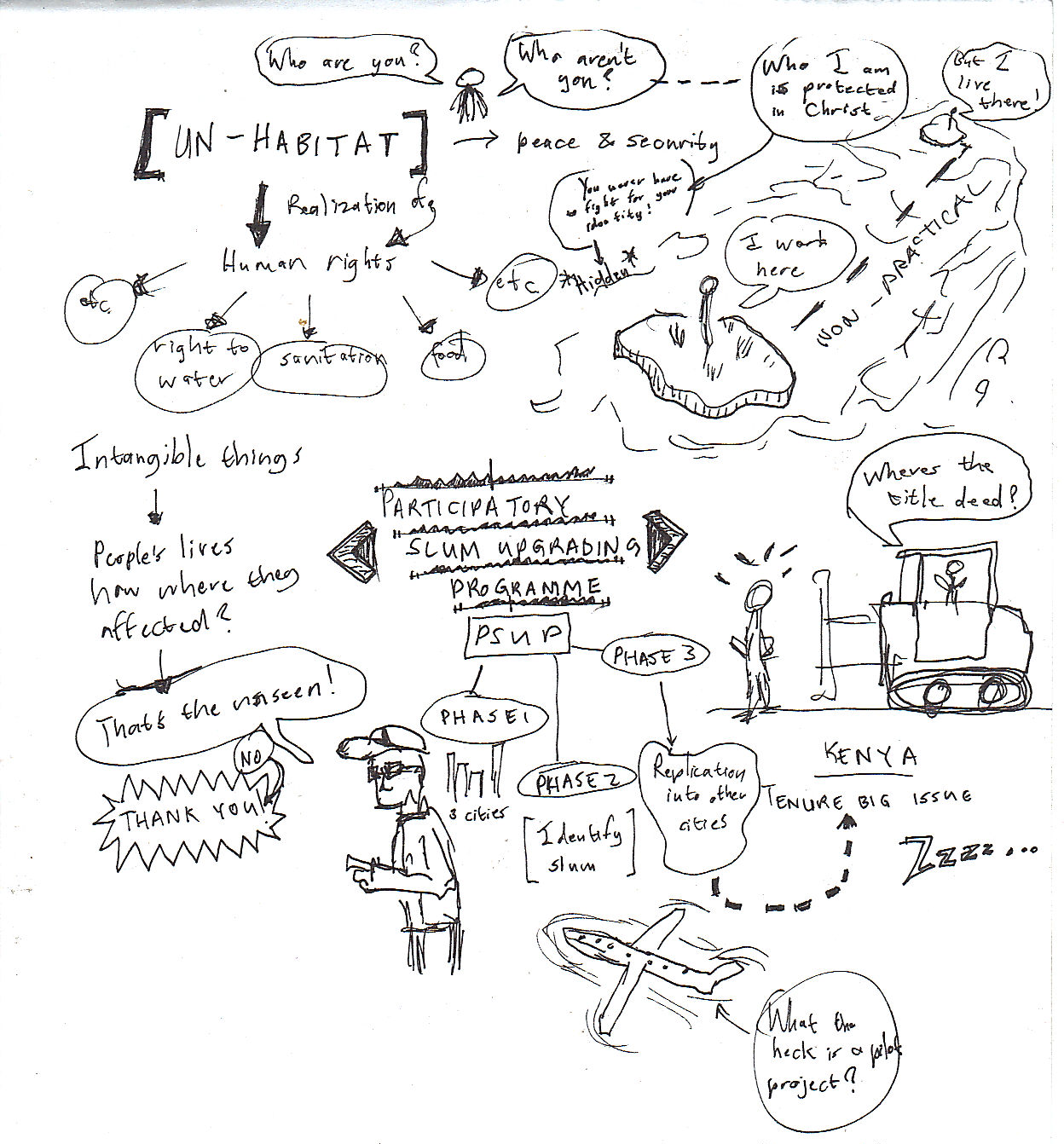
Despite the afore-mentioned similarities, being in a totally different environment from that which one is used to, it is inevitable that one will notice numerous differences, even to the little details. So in the interests of sharing what I observed in this reflection without having to write a document of great length, I resorted to using some alot of sketches that I drew up on-site, so as to elucidate not just what I learnt, but also to provide an idea of the complexity of the subject matter that emerged from our trip.
INFORMAL SETTLEMENTS
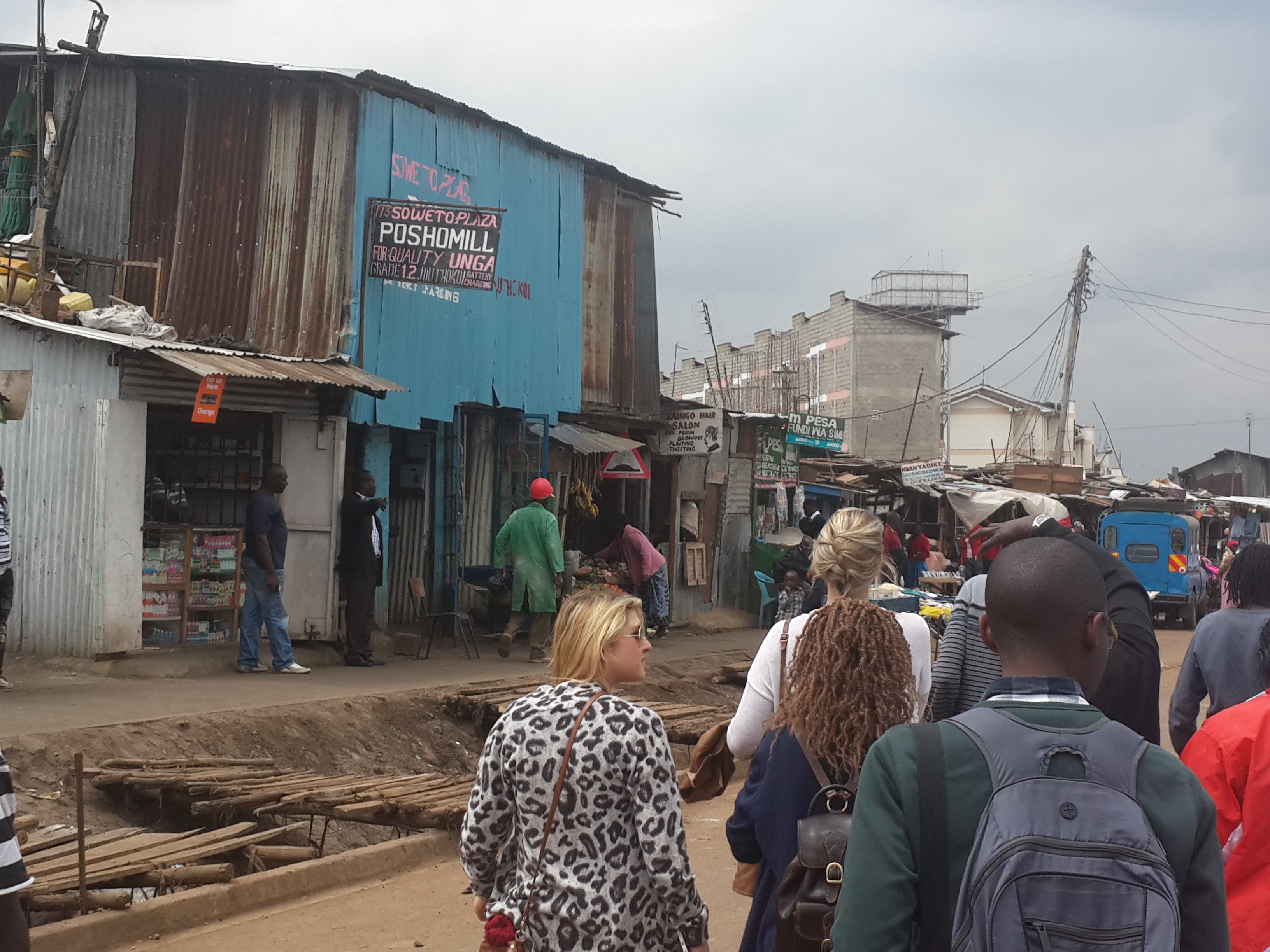
The one thing that stuck with me from the trip was our experience at the informal settlements. This is actually the only aspect of the trip that I relate to people who ask me about my adventures in Kenya – the advanced level of skill in the informal sector. Up to that point, I had never seen double storey informal buildings with cantilevers and balconies – furthermore, in these settlements, nearly every ‘shack’ had some sort of business being facilitated from Therein. In other words the people here really depended on their skills as a means to livelihood, which then resulted in community-orientated settlements that function more as self-sustaining villages as opposed to a typical South African informal settlement which is less so. At that point I wondered if there was some sort of institution that provided people with these skills in the form of a school perhaps. I remember having a chat with Ngkwato about it, and we had a long discussion about how in this region, the government actually provides free skills training for people, after which he does nothing else for them. Hence because of the need to fend for themselves, people automatically take initiative by putting into practice the skills that they have acquired so as to make a living – of which self-sustaining communities are a by-product. On the other hand one has South Africa, where the government seeks and promises to do more for the people, which perhaps results in an attitude of entitlement and complacency where people are waiting for the government to do something for them. This could also be the reason why when immigrants arrive in South Africa they thrive and prosper as they are used to worse governmental conditions. Based on this then, the issue of designing housing for people in Kenya becomes a very precarious task as one is not just designing shelter now, but also accommodating a culture. This was one of the questions I asked as we where taken on a tour around a new housing development that was meant to house residents from the settlement – “The people here have a culture of working with their hands from their homes onto the street as a means for livelihood. Do these housing developments cater for that culture as well?” I think this was the biggest lesson for me in that whole experience.
REFLECTIONS: Group project
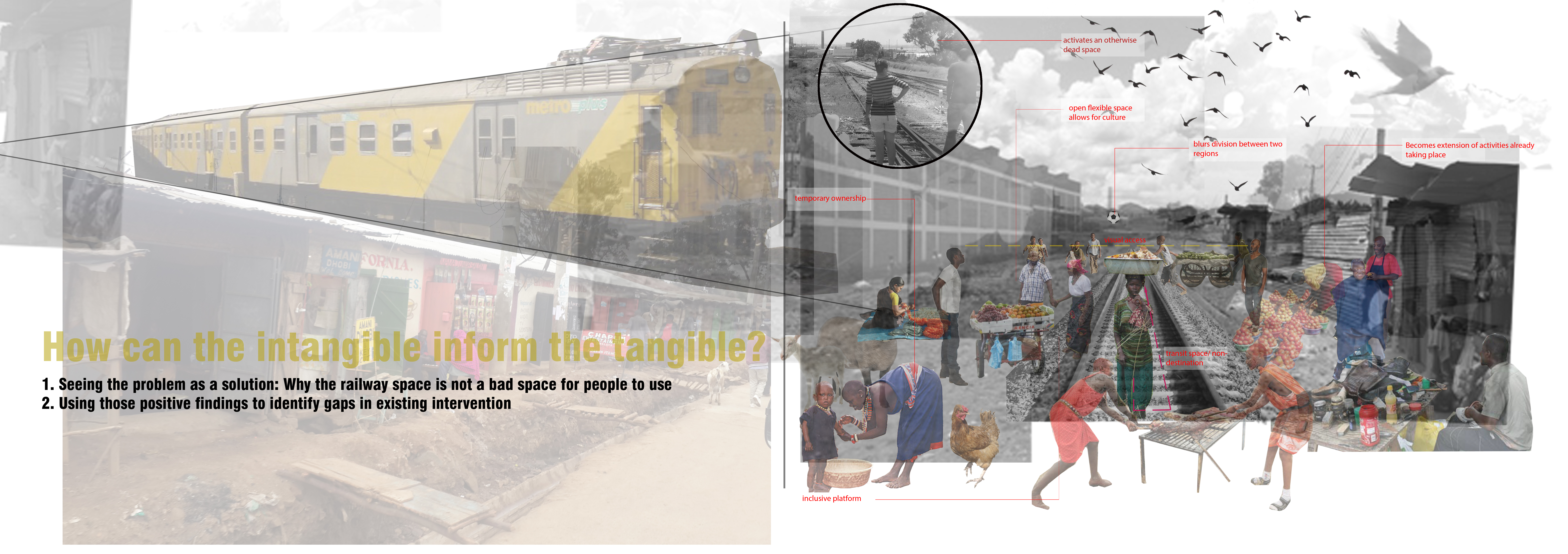
The Kibera Railway housing project in association with Muungano will see about 10000 families living along the railway reserve in Nairobi being relocated to a new housing scheme from September 2015 in an effort to find an alternative to forced evictions which had already begun from as early as 2004. Thus one could say that the current housing project is in response to what was deemed to be the problem, that is of people living and conducting their activities in close proximity to the railway line. In an attempt to explore the intangible (which in this case would be seeing beyond the problem that informed the current solution), we as a group simply altered our perspective by looking at the problem as a solution, whose principles we used as a lens to identify the gaps in the existing intervention.
THE BEST PART
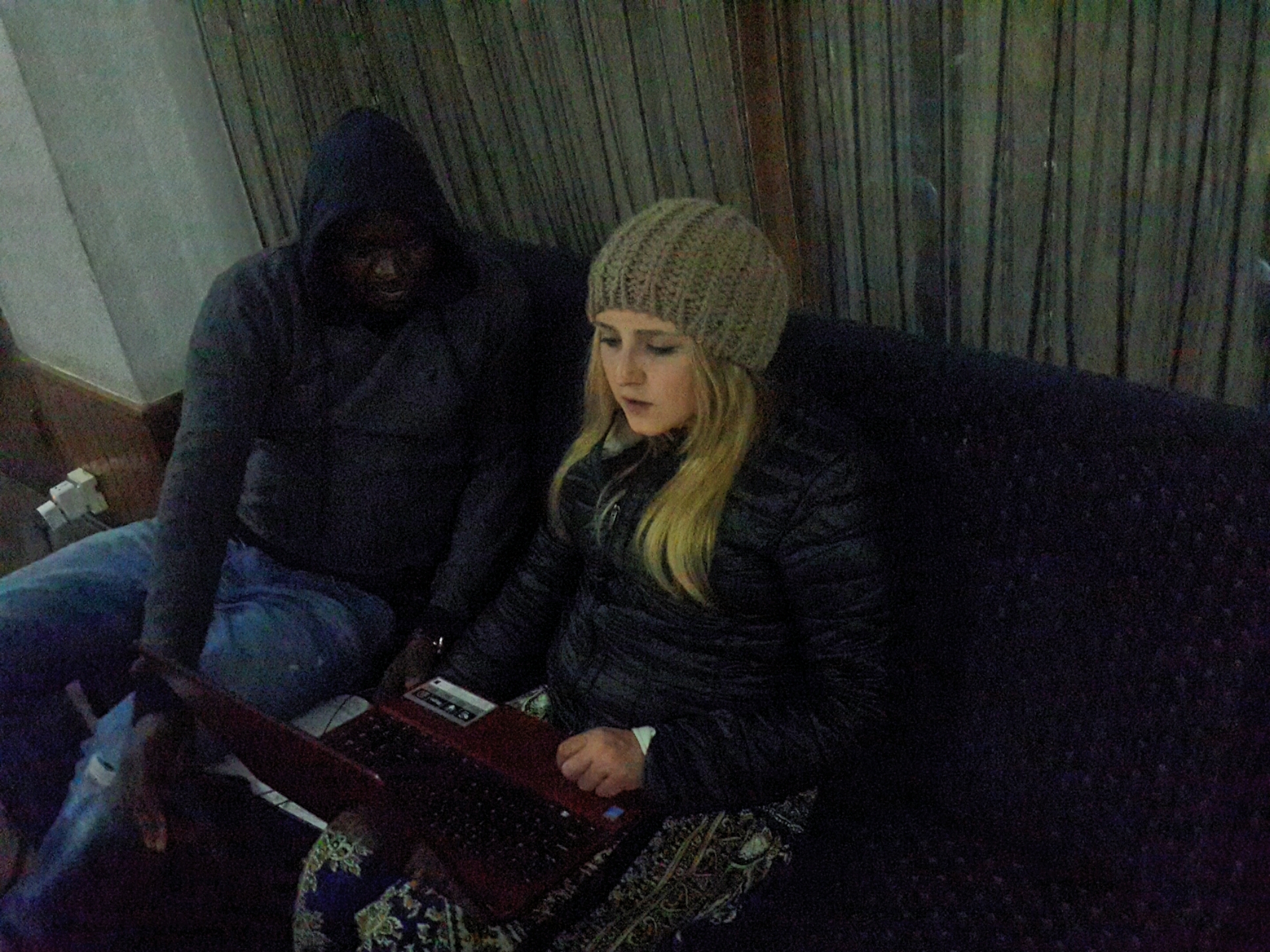
I think the best part of the trip for me was getting to know my fellow colleagues on a personal level. I feel when we are in class, a part of our person is compromised; the reason for which I cannot yet pinpoint. This should not be because one’s work should be who they are, and not a separate thing, nevertheless I had a really great time learning my class mates and found out that some of them are really interesting people.
 Lives Between Walls