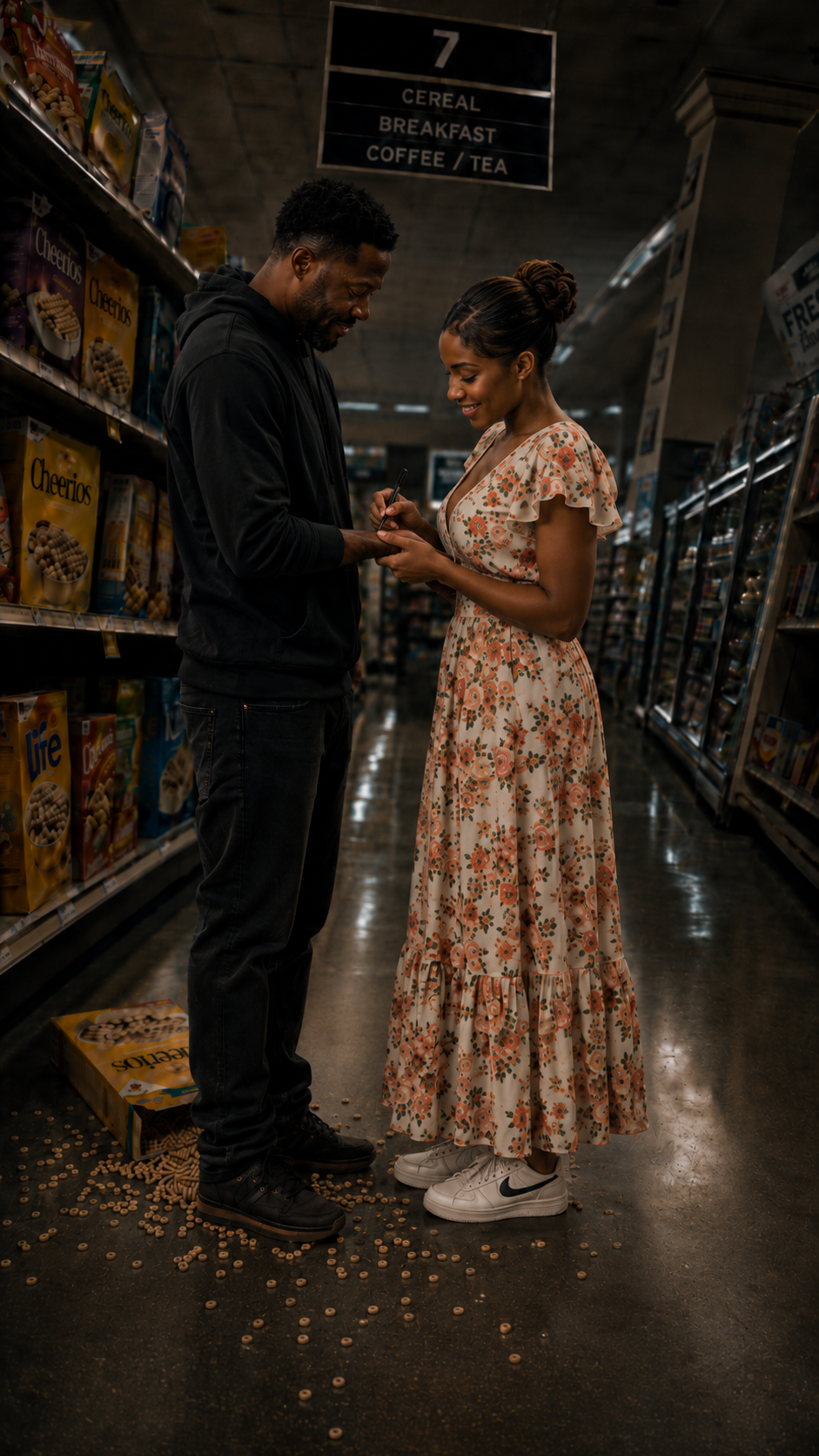
There had been something peculiar about that day.
Not in a way I could have easily explained. Nothing had happened. No thunder. No vision. No strange bird landing on my windowsill with a message from God. Nothing dramatic enough to justify the feeling that had been sitting quietly in my chest since morning.
Perhaps it was only something my spirit knew before I did.
Physically, the world had remained stubbornly ordinary. The same old morning. The same old blue sky. The same old house – bored, watching me come in and out. The same old barking dogs in my tired neighbourhood every time my neighbour, Uncle Sewale, cranked his old stubborn Isuzu at 6am, waking us all up and announcing another workday with the cough of an exhausted engine.
Painfully mundane.
Maybe that is why seeing you again hit me so hard.
There had been no warning. No fanfare. No soft music rising from some invisible orchestra. No mercy.
Just you.
The last time I saw you, I belonged to a different life.
A life I had already begun to disappear inside. Duties. Responsibilities. A name. A house. A version of myself people recognised and trusted, even when I no longer did.
You, on the other hand, were still riding on the wings of the wind.
A free spirit. A girl of laughter and colour. An eagle in flight. I had been chained to the earth, while you moved through the world as though gravity had only been suggested to you.
And your freedom had called to me.
Not deliberately. That was the worst part. You were not cruel enough to tempt me on purpose. You did not stand at the edge of my life and beckon me out of it. You simply existed. You laughed. You teased. You looked at me as though I was still alive.
And the city frowned.
Every time I made you laugh, the buildings leaned in, judging. Every time you teased me, the trees shook their heads. The towers did not approve of a friendship like ours, no matter how innocent we told ourselves it was. They would not shelter my guilt from the sun. They would not hide us. They would not look away. The streets would not look away from a Nigerian man reaching for connection in a country that had already decided he did not belong.
So I let you go, Nolwazi.
I let you return to the sky, where you could stretch your mighty wings and fly toward the horizons of possibility, while I stayed behind to navigate the heavy architecture of my responsibility.
Two souls separated by identity and time.
I deleted every tie to you. Every number. Every thread. Every small digital bridge through which desperation might one day crawl back to you. I was afraid of myself. Afraid that, in a weak moment, I would pull you back into my hunger and call it love. Afraid I would rise toward you like Icarus toward the sun, mistaking heat for salvation, only to fall back to the earth in pieces.
And you flew away.
Albeit unwillingly.
But it only made things worse.
Because after you left in presence, you began to live in my mind.
You became larger than life there. An ideal. A muse. Almost a god. I wrote about you until you were no longer only you. You became weather. You became metaphor. You became the ache behind sentences I pretended were fiction.
Perhaps it would have been better if you had stayed. At least then I might have remembered you properly, as a human being. Someone with flaws. Morning breath. Bad moods. Ordinary fears. A woman who could disappoint me if given enough time.
But distance made you holy.
Absence made you untouchable.
So when my world began to crumble, I went looking for your ghost.
I returned to the places where we used to meet. I searched for the residue of our laughter in corners the buildings had kept as evidence. I jogged through streets we had once walked together, following footsteps the pathways refused to release.
I told myself I was only remembering.
But I was hunting.
I looked for you in coffee shops. In passing cars. In reflections on shopfront glass. In women who turned their heads too quickly. In the backs of strangers wearing colours you might have worn.
But I never found you.
Not even your shadow.
Years passed.
Time was not kind to me after that. My world collapsed, though perhaps collapsed is too generous a word. Some things do not collapse suddenly. They rot quietly. They bend over years. They lean and lean and lean until one ordinary day everyone acts shocked when they finally fall.
By the time the finality arrived, there was almost nothing left to break.
I sank into pornography and other dark rooms where men go when they are too wounded to pray and too ashamed to ask for help. Darkness became a friend because it did not ask questions. It did not call me a failure.
The city, however, had questions.
The buildings looked down on me when I passed. The alleyways whispered. The windows blinked with accusation. I became one of those men people speak about softly, with pity dressed up as wisdom.
A divorced man.
A lesson.
A statistic.
A cautionary tale walking upright through the streets.
And then, years later, I saw you.
In a supermarket.
Aisle 7.
You were reaching for cereal.
Of course you were reaching for cereal. Not standing under a storm. Not framed by some golden sunset. Not waiting at a train station with a suitcase in your hand like a woman in a film.
Cereal.
That was the cruelty and kindness of it. After all the mythology my mind had built around you, life returned you to me between breakfast boxes and fluorescent lights.
You were dressed in a brightly coloured long dress. Sneakers. Spontaneous. Playful. Unserious in the way only serious people can afford to be. Still beautiful, though your eyes had been softened by time.
I froze.
For a moment, I genuinely wondered whether grief had finally learned how to project images into the world.
Should I approach?
Were you with someone?
Would you be angry?
Would you look through me?
As though you sensed the intrusion of my thoughts in your periphery, you turned.
At first, there was no recognition. Your eyes passed over me like I was any other man in any other aisle on any other day. Then something pulled you back. Some small betrayal of memory. You looked again.
And your face opened.
“Oh my God.”
The cereal slipped from your hand and hit the floor, spilling its contents between us like a small, ridiculous barricade.
I smiled slowly, though I could feel something inside me trembling like a frightened animal as I walked closer.
“Nolwazi.”
Your eyes filled with tears. You inhaled sharply and lifted a hand to your face, trying to stop whatever was rising before it escaped.
“Nolwazi,” I said again, touching your trembling shoulder. “I’m sorry.”
You shook your head, pressing your lips together as though holding back a flood.
Then your eyes dropped.
You saw my hand.
My ringless finger.
The pale dent around the skin where eternity once sat.
You stared at it for a moment, and when you looked back at me, disbelief had softened into something worse.
Understanding.
“What happened?” you softly asked.
I sighed and brushed my hand over my hair. I glanced around the supermarket, at the fridges, the shelves, the columns, as though they might provide me with a reasonable answer. They didn’t. They just stared at me in indifference.
“I…” My voice failed me. “I don’t know. Things fell apart.”
Before I could say anything else, your arms were around me.
You held me with a sobbing compassion that undid something I had spent years trying to keep tied. I felt your tears on my neck, warm and immediate. I let them wash me. The pain. The shame. The hunger. The years.
I put my arms around you too.
“I’m sorry, Nolwazi.”
A trembling sigh escaped you.
“Don’t be.”
And there we stood in aisle 7, cereal on the floor, reunited as two eagles who had both forgotten how much the sky cost.
A part of me had hoped I would never see you again.
Not because I hated you.
Because I didn’t know whether I would survive it.
Whether I would survive letting you go again.
I held you close, and the mall seemed to dissolve around us.
Your hands now rested on my chest. Serene. Slow. As though this was not an accident. As though this was the destination all along, and all those years had merely been the long road toward aisle 7.
We took our time.
Too much time, perhaps.
Because the soft, sharp sound of someone clearing her throat suddenly plucked our moment out of the tree.
“Ahem.”
We pulled apart.
A chubby cleaning lady stood beside us, unimpressed, one hand on her broom, the other on her hip, the abandoned cereal box lying between us like evidence at a crime scene.
You covered your mouth, startled.
I rubbed the back of my head.
“Um… Sorry,” I muttered.
She gave us the kind of look only older women and cleaning staff have perfected — a look that said she had seen too much of life to be moved by whatever nonsense this was.
Then she swept between us.
For a few seconds, embarrassment stood where warmth had been. We looked everywhere but at each other. You pretended to adjust the side of your hair, but the flush on your face betrayed you.
“We should talk,” I said, after the cleaning lady had shuffled away. “Maybe go for drinks sometime?”
You smiled.
“That sounds lovely.”
I asked for your number.
You reached into your bag, took out a marker, and held out my hand. Then you wrote yourself onto my skin.
“Don’t delete it this time,” you said.
I looked at the numbers on my hand. Black ink. Warm skin. A bridge rebuilt in handwriting. Before, your number had been on my phone, but now it is on me. Deleting it would be deleting myself.
“I wouldn’t dream of it,” I said.
“Alright then,” you said – face glowing, giving me a gentle nudge on the shoulder. “I’ll see you around.”
I nodded and began backing away, as though backing away from something dangerous. Something beautiful. Something that might pounce if I turned my back too quickly.
“Oh, by the way, Tunde,” you called.
I stopped.
You smiled, but this smile was different. Quieter. Knowing.
“I’ve never stopped reading your stories.”
My throat tightened.
“Oh really?”
You nodded.
“I’ve always wondered which parts were me,” you said.
 Lives Between Walls
What do you think about this?